101 Ways It Was
How a Generation Quietly Built the Modern World
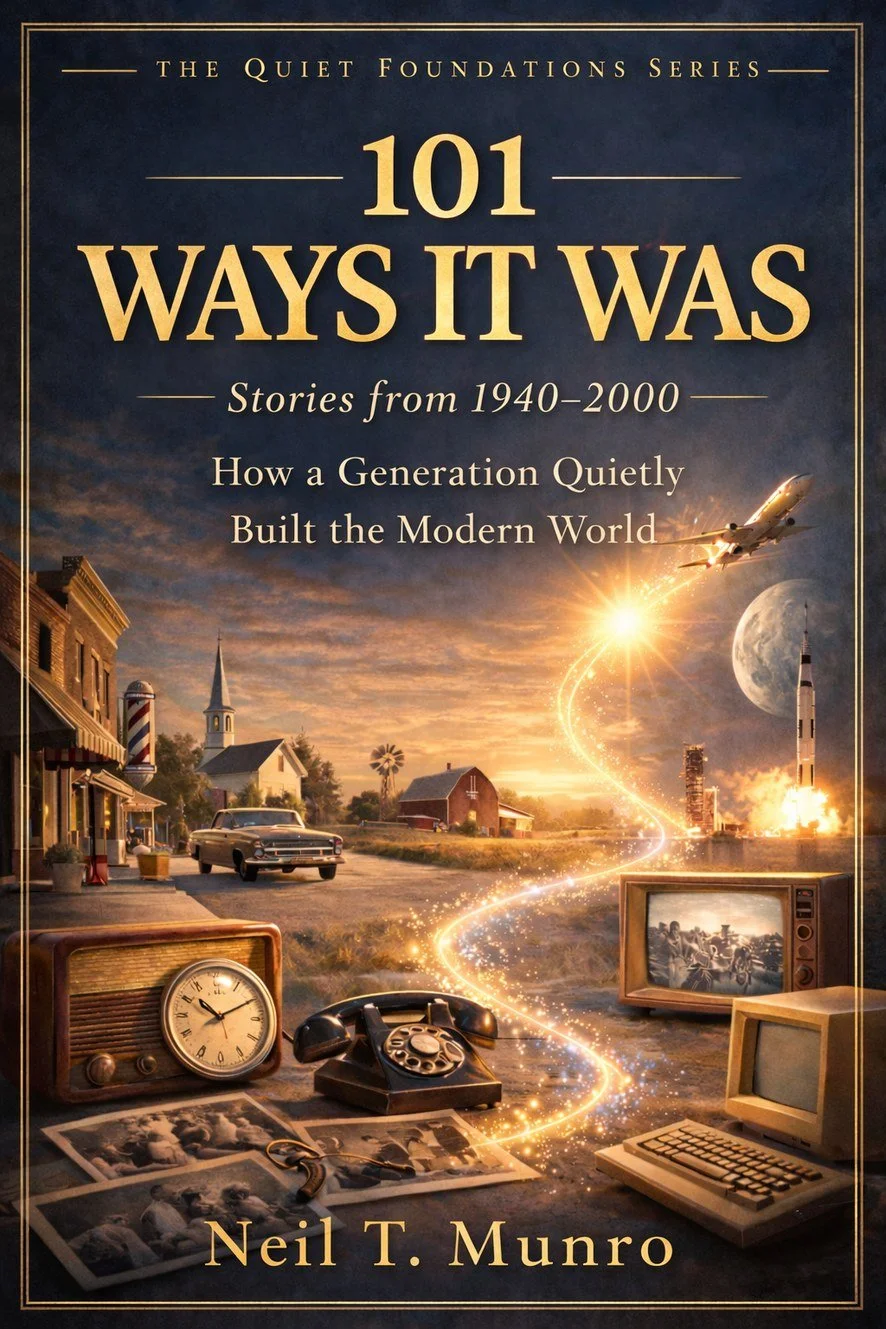
There was a time when life moved a little slower.
When neighbors knew one another by name, when families gathered around the dinner table, and when the simple responsibilities of everyday living helped shape the character of a generation.
Between 1940 and 2000, the world experienced one of the most remarkable periods of change in human history. From the familiar sounds of small-town Main Streets and the morning milkman to the arrival of television, jet travel, space exploration, computers, and the internet, nearly every part of daily life was transformed.
Yet behind these extraordinary changes were millions of ordinary people whose contributions seldom appeared in history books.
101 Ways It Was takes readers on a memorable journey through sixty years of American life, exploring 101 familiar traditions, experiences, inventions, and turning points that helped build the modern world.
Through engaging stories and thoughtful reflections, Neil T. Munro brings to life the everyday experiences of families, farmers, teachers, factory workers, small business owners, and countless others who quietly contributed to a changing nation.
Each story looks beyond what happened to consider why it mattered, what changed, and what we might still learn from those earlier years.
For readers who lived through this remarkable period, the book offers an opportunity to revisit treasured memories, familiar places, and a way of life that gradually disappeared. For younger generations, it opens a window into a world they may never have known, revealing how much of today’s comfort, opportunity, and progress was made possible by those who came before them.
But this book is more than a collection of memories or a celebration of the past. It is a reflection on the enduring values of responsibility, hard work, family, faith, perseverance, and community. It reminds us that progress is not measured only by the inventions we create or the conveniences we enjoy, but also by the character of the people who make that progress possible.
101 Ways It Was invites readers of every generation to remember where we came from, appreciate those who helped bring us here, and consider which of yesterday’s quiet foundations are worth carrying into tomorrow.
For while the world around us may change beyond recognition, the values that give meaning to life need never grow old.
An Author’s Thought
As I look back over the many years of my life, I find myself thinking not only about how much the world has changed, but about the remarkable people who lived through those changes.
I remember a time when life was measured less by how quickly things could be accomplished and more by the satisfaction of a day’s work, the importance of family, and the simple pleasure of knowing your neighbors.
We did not have all the conveniences we enjoy today. Much of what we now take for granted had yet to be invented. But we had something that I believe remains just as important today: an understanding that life was built through effort, responsibility, kindness, and the willingness to help one another.
I have witnessed a world move from the familiar traditions of an earlier America into an age of extraordinary technology and opportunity. And while I marvel at what mankind has accomplished, I sometimes wonder whether, in our eagerness to move forward, we have forgotten to appreciate some of the things that made those earlier years so meaningful.
My purpose in writing this book was not to suggest that yesterday was better than today. Every generation has faced its own difficulties, and every generation has contributed something worthwhile.
Rather, I wanted to preserve a little of the way it was before those memories quietly disappear.
I hope those who remember these years will find themselves smiling at a familiar story, recalling a forgotten experience, or remembering someone who made a difference in their lives.
And for younger readers, I hope these pages offer a greater appreciation for the generations whose sacrifices, inventions, and everyday efforts helped create the opportunities we now enjoy.
Perhaps the greatest lesson I have learned is that history is not made only by famous people or extraordinary events. Much of it is written quietly, through ordinary lives lived with purpose.
We cannot return to yesterday, nor should we wish to. But we can carry forward the best of what yesterday taught us.
And perhaps, in doing so, we will leave something equally meaningful for the generations yet to come.
We cannot return to yesterday, nor should we wish to. But we can carry forward the best of what yesterday taught us.
The Author’s Thought — Neil T. Munro
Every book in this series is an invitation — to slow down, and to notice what has always been there.